

The Cost of Google Ads by Industry (Updated 2026)
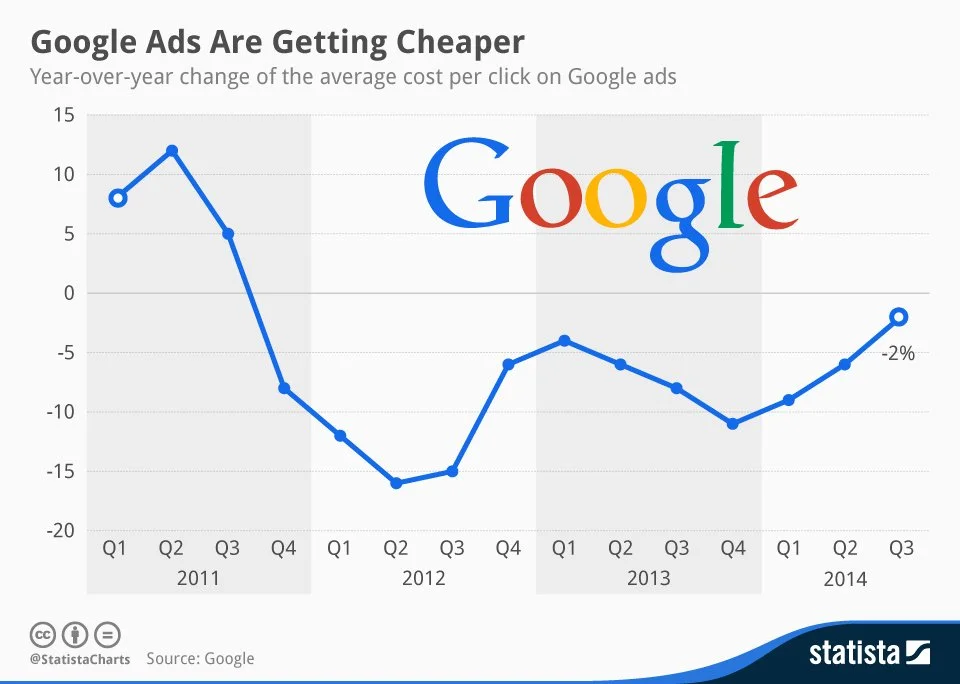
One of the most common questions business owners ask before launching a campaign is, “How much do Google Ads cost?” The truth is that there is no single answer. Your costs depend on your industry, competition, location, and how well your campaigns are managed. As we move through 2026, the landscape of digital advertising continues to evolve. Rising competition and smarter automation mean costs are changing across nearly every sector. Whether you run a local service business, an ecommerce store, or a national brand, understanding what affects ad pricing can help you budget more effectively and improve your return on investment. In this updated guide, we will break down the average costs of Google Ads by industry, explain what influences those prices, and show you how to reduce your cost per lead without sacrificing performance.
How Google Ads Pricing Works
Before comparing industries, it is important to understand how Google Ads pricing is determined. Google Ads runs on an auction system. Advertisers bid on keywords, and each time a user searches, Google decides which ads to show based on a combination of bid amount, Quality Score, and relevance. You are charged only when someone clicks your ad, making this model Pay Per Click (PPC). The average cost per click (CPC) varies depending on how competitive a keyword is and how well your ads and landing pages perform. According to WordStream, the average CPC across all industries in North America is around two to three dollars, but this can rise dramatically in high-value markets like law or insurance.
Average Google Ads Costs by Industry in 2026
| Industry | Average Cost Per Click | Average Conversion Rate | Typical Monthly Budget |
|---|---|---|---|
| Legal Services | $7.00 – $13.00 | 7% – 10% | $5,000 – $20,000 |
| Insurance | $5.00 – $9.00 | 5% – 8% | $4,000 – $15,000 |
| Real Estate | $3.50 – $6.00 | 4% – 6% | $2,500 – $10,000 |
| Home Services | $3.00 – $5.50 | 10% – 15% | $1,500 – $6,000 |
| Healthcare | $2.50 – $5.00 | 6% – 9% | $2,000 – $7,000 |
| Ecommerce | $1.00 – $3.00 | 3% – 5% | $2,000 – $8,000 |
| Education | $2.00 – $4.00 | 5% – 8% | $2,000 – $6,000 |
| Finance | $4.00 – $8.00 | 6% – 9% | $4,000 – $12,000 |
| Technology | $3.50 – $7.00 | 5% – 8% | $3,000 – $10,000 |
| Travel & Hospitality | $1.50 – $3.50 | 4% – 7% | $1,500 – $5,000 |
Note: These are general averages. Your actual CPC, conversion rate, and budget will vary based on targeting, keyword intent, competition, and landing page quality.
Legal Industry
The legal field remains one of the most expensive sectors for Google Ads. Keywords like “personal injury lawyer” or “criminal defense attorney” can easily exceed ten dollars per click due to high competition and the high value of each lead. A single new client can be worth thousands of dollars, which justifies the higher costs. For law firms, success comes down to precise keyword targeting and local optimization. Even small improvements to Quality Score can significantly reduce CPC while maintaining strong lead quality.
Insurance
Insurance companies also face high advertising costs, with competitive terms such as “life insurance quote” or “auto insurance near me” ranging from five to nine dollars per click. Automation and machine learning have helped lower costs for well-optimized campaigns, but competition remains intense. For this industry, long-term ROI depends on effective lead nurturing since customers often take time to compare quotes before making a decision.
Real Estate
Real estate has become more competitive, particularly in large metropolitan areas. CPCs typically range between three and six dollars, but conversion rates can be modest if targeting is too broad. Successful real estate advertisers use hyper-local campaigns, strong visuals, and landing pages with clear calls to action such as “Book a Property Tour” or “Get a Free Valuation.” Seasonality also affects performance. Campaigns during peak buying months usually require higher bids to maintain visibility.
Home Services
Home service industries like plumbing, HVAC, electrical, and roofing remain among the best-performing sectors for Google Ads in 2026. Average clicks cost between three and five dollars, but conversion rates often exceed ten percent because users searching for these services usually have immediate needs. For local service businesses, the key to success lies in properly structured campaigns, service-based ad groups, and consistent use of location extensions. If you want to learn how to maximize ROI for your own campaigns, read our guide How to Structure a Google Ads Campaign for Maximum ROI, which explains how to organize ad groups and budgets for maximum efficiency.
Healthcare
Medical professionals such as dentists, chiropractors, and clinics typically pay between two and five dollars per click. Healthcare ads require special attention to compliance and trust-building. Landing pages should clearly communicate services, credentials, and appointment options. Optimizing mobile experience and using call extensions help increase conversion rates, as many users search for nearby practitioners from their phones.
Ecommerce
Ecommerce advertising tends to have lower CPCs but also lower conversion rates. Clicks usually cost between one and three dollars, depending on the niche and competition. Success depends on compelling product visuals, competitive pricing, and a smooth checkout process. Dynamic remarketing, which shows ads to users who viewed specific products, continues to deliver strong returns for online stores in 2026.
Education
Education-related keywords such as “online courses” or “business training programs” average between two and four dollars per click. Performance depends heavily on credibility and content quality. Adding testimonials, accreditation badges, and clear calls to action helps improve trust and conversions. Online education platforms benefit from targeted remarketing campaigns to re-engage potential students who visited course pages but did not enroll.
Finance
The finance sector, including loans, credit cards, and investment services, sees CPCs between four and eight dollars. Regulations in advertising financial services mean campaigns must be transparent and compliant, often requiring additional ad review. Well-optimized campaigns that combine relevant keywords with high-quality landing pages achieve strong conversion rates despite higher initial costs.
Technology
Technology and software companies continue to invest heavily in Google Ads, especially those offering SaaS or IT services. Average costs range from three to seven dollars per click, depending on audience targeting and competition. Success in this space comes from precision targeting and clear differentiation. Showing value through case studies, free demos, or trial offers helps improve conversions and lower acquisition costs.
Travel and Hospitality
The travel industry has rebounded significantly since global restrictions lifted, but competition remains moderate. Clicks range from one and a half to three and a half dollars, depending on destination and season. For hotels and tourism businesses, leveraging Performance Max campaigns and localized ad extensions can drive strong seasonal performance.
What Affects the Cost of Google Ads
Several factors influence how much you will pay for clicks and leads.
Competition: More advertisers bidding on the same keywords drive costs up.
Quality Score: Higher Quality Scores reduce costs by improving ad relevance.
Ad Relevance: Aligning ad copy with search intent improves performance.
Landing Page Quality: A page that matches the ad and converts well can lower your CPC.
Device and Location: Mobile clicks and large cities often cost more due to higher competition.
Bidding Strategy: Automated strategies may raise bids temporarily to maximize conversions.
How to Reduce Costs Without Losing Performance
Even in competitive industries, you can control spending with smart strategy and continuous optimization.
Use long-tail keywords that capture specific search intent.
Add negative keywords to eliminate irrelevant clicks.
Improve landing pages for better Quality Scores.
Test ad variations regularly to improve click-through rate.
Focus on remarketing to re-engage past visitors at a lower cost.
These steps not only lower CPC but also improve ROI by focusing your budget on high-quality traffic.
How Budget Affects Performance
Your monthly budget influences the amount of data available for optimization. Small budgets may take longer to reach stable performance because Google’s algorithms need enough conversions to optimize effectively. For most small businesses, a starting point of one thousand to three thousand dollars per month provides enough data for meaningful insights. As campaigns become more efficient, gradually increasing spend allows you to scale without losing control over ROI.
The Relationship Between Cost and ROI
It is important to remember that higher costs do not always mean worse performance. For example, a law firm paying ten dollars per click but generating clients worth thousands can have a far better ROI than an ecommerce brand paying one dollar per click for ten-dollar products. Focus on profitability, not just CPC. The true measure of success is how much revenue each dollar of ad spend produces. For an in-depth discussion on this topic, visit our article What’s a Good ROI for Google Ads in 2026, where we explain how to calculate realistic expectations across industries.
Why Working With an Agency Saves Money
Professional Google Ads management ensures your campaigns are continuously optimized. An experienced agency can identify wasted spend, improve ad relevance, and enhance tracking accuracy. At Cristanta Digital Marketing, we offer Done for You Google Ads Management that includes full analytics setup, unlimited ad testing, and landing page optimization — all designed to maximize ROI while reducing unnecessary spend. You can learn more or book your personalized audit through our Paid Advertising Services page.
Conclusion
The cost of Google Ads varies by industry, but one thing remains consistent: strategic management always outperforms guesswork. Understanding your industry benchmarks helps you budget intelligently, set realistic expectations, and identify opportunities for improvement. Whether your clicks cost two dollars or ten, the key is focusing on ROI, not just cost. When your campaigns are structured correctly, tracked accurately, and continuously optimized, every dollar you spend has the potential to deliver measurable growth. If you want to understand how your industry compares and what your advertising dollars could achieve, reach out to Cristanta Digital Marketing for a professional campaign review.