

Keyword Match Types Explained (Broad, Phrase, Exact)
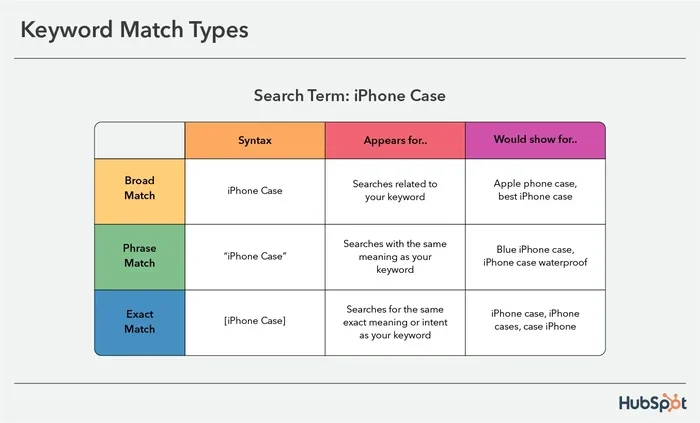
If you are running Google Ads, keywords are the foundation of your campaign. The words and phrases you choose tell Google who should see your ads and when. However, what many advertisers overlook is that the same keyword can behave very differently depending on the match type you assign to it. Match types are what control how strictly or loosely Google matches your keywords with real user searches. Understanding how these match types work is one of the most important parts of building a campaign that delivers maximum return on investment. In this guide, you will learn how broad, phrase, and exact match types differ, when to use each one, and how to combine them for the best results.
Why Keyword Match Types Matter
When someone types a query into Google, the platform has to decide which ads are eligible to appear. Keyword match types tell Google how flexible it should be in interpreting your keywords. For example, if your keyword is Google Ads agency Toronto, do you want your ad to appear only when someone searches for that exact phrase, or also when they search for digital marketing companies in Toronto? Match types give you that control. Choosing the right ones helps you:
Show ads to the right audience
Reduce wasted spend
Improve click-through rates
Increase conversion rates
Without properly using match types, your campaigns can quickly lose focus and start attracting irrelevant clicks that eat up your budget.
The Three Main Keyword Match Types
1. Broad Match
Broad match is Google’s default setting. When you add a keyword without any symbols or quotation marks, Google treats it as broad match. This type gives Google the most freedom to interpret your keyword. It can show your ad for related searches, synonyms, variations, and even different phrases that share the same intent.
Example: Keyword: plumbing services Toronto. Your ad could show for:
best plumber near me
emergency drain repair Toronto
fix leaking pipe
Broad match helps you reach the widest audience, but it can also lead to wasted clicks if you are not careful. It is useful for discovering new search terms and identifying patterns in user behavior.
When to use it:
When launching new campaigns to gather data
When using Smart Bidding strategies such as Target CPA or Target ROAS
When you have strong negative keyword lists to filter irrelevant traffic
To learn more about how Google interprets intent in broad match, you can read the official Google Ads Help guide on match types.
2. Phrase Match
Phrase match offers more control than broad match but still allows some flexibility. When you put quotation marks around your keyword, you are telling Google to show your ad only when the search includes that exact phrase or close variations of it.
Example:
Keyword: "plumbing services Toronto"
Your ad could show for:
affordable plumbing services Toronto
plumbing services Toronto open today
plumbing services in downtown Toronto
However, your ad would not show for unrelated searches like emergency drain cleaning because the core phrase is missing. Phrase match strikes a good balance between reach and precision. It ensures your ad appears for relevant searches while allowing enough flexibility to capture new opportunities.
When to use it:
When you want targeted traffic without over-restricting reach
When you are optimizing campaigns for specific products or services
When you are balancing exploration and control
For more on how phrase match evolved, check out this article on Search Engine Land which explains how Google merged old modified broad match behavior into phrase match.
3. Exact Match
Exact match is the strictest option. When you enclose your keyword in square brackets, Google will only show your ad for searches that exactly match your keyword or are very close variations.
Example:
Keyword: [plumbing services Toronto]
Your ad could show for:
plumbing services Toronto
plumbing service Toronto
Toronto plumbing services
It would not show for searches like best plumbing company Toronto or emergency plumber near me because those change the meaning. Exact match is ideal when you want full control over who sees your ad and when. It helps eliminate wasted clicks and often produces the highest conversion rates. The trade-off is that your reach will be smaller.
When to use it:
When targeting high-intent searches
When running campaigns with limited budgets
When your goal is maximum precision rather than volume
The Role of Negative Keywords
Negative keywords are the safety net of your campaign. They prevent your ads from showing for irrelevant searches that might share similar wording but a different intent. For example, if you are a paid agency offering professional advertising services, you might add negative keywords such as:
free marketing courses
DIY advertising tips
how to start an agency
This ensures your ads only appear for people looking to hire experts, not people looking for free information. Review your search term report regularly and update your negative keyword lists to keep performance consistent.
How Match Types Impact ROI
Every keyword match type has a different cost-to-benefit relationship.
Broad match tends to have lower click costs but more irrelevant traffic.
Phrase match balances cost and quality by maintaining relevance while keeping decent volume.
Exact match typically costs more per click but drives the highest conversion rates because the intent is so precise.
The key is not to rely on one type but to use performance data to determine which mix delivers the best return for your business.
Example: A Local Service Campaign
Imagine you are running ads for a Toronto roofing company. You might set up your campaign like this:
Ad Group 1: Broad Match
roofing services Toronto
roof repair Toronto
Ad Group 2: Phrase Match
"roof repair Toronto"
"roof installation Toronto"
Ad Group 3: Exact Match
[roof repair Toronto]
[roofing company Toronto]
After a few weeks, you review your data and find that the phrase and exact match keywords produce the most leads. You then lower the budget for broad match and focus more on the keywords that convert. This is how structured testing with match types can reveal where your money actually works hardest.
Common Mistakes to Avoid
Many advertisers waste thousands because they misunderstand match types. Here are the most common errors and how to avoid them:
1. Using only broad match without negatives
This can drain your budget fast. Always include negative keywords when using broad match.
2. Overusing exact match
Too many exact match keywords can limit your reach and stall growth. Leave room for phrase match to find new opportunities.
3. Ignoring search term reports
Your search term data reveals how Google is interpreting your keywords. Review it often to refine your targeting.
4. Not updating match types over time
As your campaign gathers data, adjust match types. Start broad to collect insights, then move toward phrase and exact for precision.
5. Grouping unrelated match types together
Keep match types separate within your ad groups. This allows more accurate control of bids and analysis.
How to Test Match Types
Testing is what turns a good campaign into a great one. Start with one keyword in multiple match types across different ad groups. For example:
Broad: plumbing services Toronto
Phrase: "plumbing services Toronto"
Exact: [plumbing services Toronto]
Run them with the same ad copy and budget for a few weeks. Compare metrics such as click-through rate, conversion rate, and cost per conversion. This hands-on data will show you which match type delivers the best return.
The Future of Match Types
Google continues to evolve how match types function. Over the past few years, broad and phrase match have become smarter, using intent recognition rather than exact wording. In 2026, the trend is clear. Google’s machine learning focuses more on understanding context than just literal matches. This means advertisers must pay closer attention to data quality, negative keywords, and ad relevance. Match types are still essential, but their role is shifting from strict control toward guiding Google’s intent-based system. For ongoing updates and insights, Search Engine Journal regularly publishes detailed analyses of Google Ads changes that are worth following.
Bringing It All Together
To get the best ROI from your keywords:
Start broad to explore new opportunities.
Move to phrase match once you identify strong performing terms.
Use exact match for your proven, high-intent keywords.
Continuously refine negative keywords to protect your budget.
Monitor search term reports weekly to stay aligned with user intent.
The most successful advertisers treat match types as a system, not a one-time choice. They constantly analyze performance and make adjustments based on data, not guesswork.
Why Partnering with Experts Makes a Difference
Managing keyword match types effectively requires both strategy and time. Small mistakes can lead to wasted spend or missed opportunities. At Cristanta Digital Marketing, we specialize in building and optimizing Google Ads campaigns that deliver measurable results. Our team uses structured keyword strategies, conversion-focused ad copy, and precision targeting to help businesses grow faster. If you want to take the guesswork out of Google Ads and start seeing consistent returns, visit our Paid Advertising Services page. We can help you design campaigns that make every keyword and every dollar count.
Conclusion
Keyword match types are one of the most powerful tools in Google Ads. They control who sees your ads, how your budget is spent, and ultimately how much profit you make. Broad match brings reach. Phrase match brings balance. Exact match brings precision. When used together strategically, they form the backbone of a campaign that performs consistently and profitably. Learning how to use them effectively takes time, but once you understand their strengths and limitations, your campaigns will become easier to manage and far more successful. If you are ready to improve your keyword targeting and see stronger ROI from your Google Ads, reach out to Cristanta Digital Marketing. Our team can help you create a customized advertising strategy that turns clicks into conversions and makes every ad dollar work harder.