

How to Optimize Google Ads Quality Score
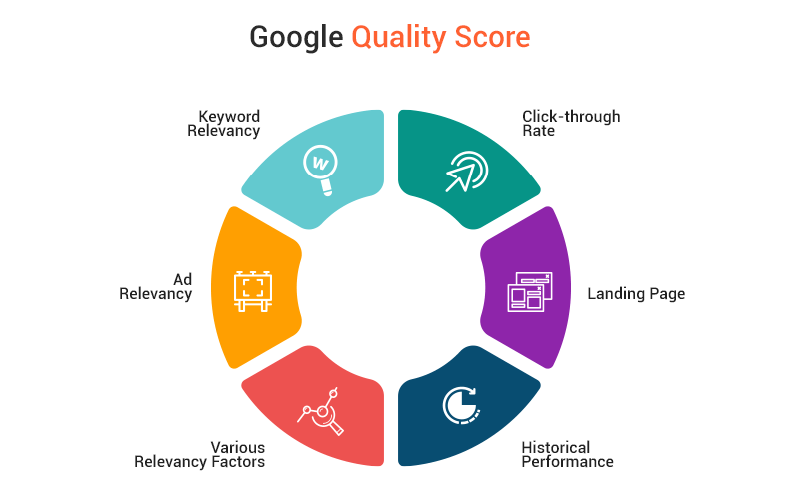
When it comes to running profitable Google Ads campaigns, few metrics are as important as Quality Score. It quietly determines how often your ads appear, how much you pay per click, and whether your campaign is truly efficient. Many advertisers focus only on bids or budgets, yet Quality Score often decides who wins the auction and who pays more for the same result. The good news is that Quality Score is something you can actively improve. With the right strategy, your ads can become more visible, your clicks can cost less, and your return on investment can grow dramatically. This guide explains what Quality Score really means, how it works, and how you can improve it step by step.
What Is Google Ads Quality Score
Quality Score is Google’s rating of the relevance and quality of your keywords, ads, and landing pages. It is measured on a scale from one to ten and reflects how well your ad experience aligns with what users are looking for. The higher your Quality Score, the better your ad rank and the lower your cost per click. In other words, Google rewards advertisers who deliver useful, relevant, and positive experiences to searchers. According to Google’s official documentation, Quality Score is not a direct ranking factor but rather an indicator of how competitive your ads are within the auction. It is influenced by three key components:
Expected click-through rate
Ad relevance
Landing page experience
Let’s look at each of these in more detail.
Expected Click-Through Rate
Expected click-through rate, often called CTR, predicts how likely it is that someone will click on your ad when it appears. If your ads consistently attract clicks compared to competitors, your expected CTR increases. Google views this as a signal that your ad is useful and engaging. A strong CTR shows that your ad resonates with searchers. A weak CTR, on the other hand, tells Google your message is not connecting with the audience. To improve CTR:
Write headlines that match search intent.
Use emotional or benefit-driven language.
Include a clear call to action such as “Get a Quote” or “Book Now.”
Keep testing variations. Even a small improvement in CTR can lift your Quality Score over time.
Ad Relevance
Ad relevance measures how closely your ad text matches the keyword and the user’s search intent. If someone searches for “Google Ads management Toronto” and your ad headline says “Expert Google Ads Management in Toronto,” that is highly relevant. But if your ad says “Digital Marketing Services for All Businesses,” it is less specific and therefore less relevant. Improving ad relevance means making your message align perfectly with what people are actually searching for. Here are a few ways to do it:
Create tightly themed ad groups with only a few closely related keywords.
Write ad copy that includes those exact keywords naturally.
Avoid generic or overly broad messages that could apply to anything.
When relevance improves, your ads earn higher engagement and better placement at lower costs.
Landing Page Experience
Your landing page plays a major role in Quality Score. Even if your ad is perfect, users will leave if the page they land on does not match their expectations or is slow to load. Google evaluates landing pages based on factors like:
Relevance to the keyword and ad
Ease of navigation
Mobile friendliness
Page speed
Transparency and trustworthiness
To optimize your landing pages:
Make sure the headline matches the ad’s promise.
Keep the design clean and focused on one goal.
Avoid unnecessary pop-ups or distractions.
Optimize for fast loading times and mobile performance.
Google’s Page Experience insights provide excellent guidelines for improving usability and load speed, which directly influence landing page quality.
Why Quality Score Matters
Quality Score affects almost everything inside your Google Ads account.
Ad Rank: Google multiplies your Quality Score by your bid to determine Ad Rank. This decides whether your ad appears and where it shows on the page.
Cost Per Click: A higher Quality Score means you pay less for each click because Google rewards relevant ads.
Return on Investment: Better Quality Scores lead to higher ad positions and lower costs, giving you more conversions for the same budget.
For example, if two advertisers are bidding the same amount, the one with the higher Quality Score will appear above the other while paying less per click.
How to Check Your Quality Score
You can view your Quality Score in your Google Ads account by adding the Quality Score column to your keyword report. To see which area needs improvement, Google also provides separate ratings for expected CTR, ad relevance, and landing page experience. A score of:
8 to 10 is excellent
5 to 7 is average
1 to 4 indicates significant room for improvement
Checking this data regularly helps you prioritize which keywords and ads to optimize first.
How to Improve Quality Score
1. Organize Keywords into Tight Ad Groups
Quality Score starts with relevance, and relevance starts at the ad group level. When an ad group contains too many loosely related keywords, it becomes impossible to write ads—or build landing pages—that accurately match every search. Google sees this mismatch, users feel it, and Quality Score drops. Each ad group should be built around a single intent, not a broad category. Instead of grouping all digital marketing keywords together, break them into focused clusters such as Google Ads management, SEO services, or social media advertising. Go even deeper when volume allows—separate branded terms, local intent terms, and high-conversion phrases into their own groups. This structure allows you to:
Write ad copy that closely mirrors the keyword
Send traffic to a page that directly answers the search
Improve expected CTR and ad relevance simultaneously
When Google can clearly see that a keyword, ad, and landing page all align around the same intent, Quality Score improves naturally.
2. Write Ads That Match Search Intent
Google doesn’t reward clever ads—it rewards relevant ads. Your copy should make it immediately obvious that you are the best possible answer to the user’s search. If someone searches “Google Ads agency Toronto,” your ad should reflect that exact intent. The keyword (or a close variant) should appear in the headline, and the description should reinforce why your agency is the right solution—local expertise, proven results, or a specific offer. Generic messaging is one of the fastest ways to hurt Quality Score. Ads that could apply to any business, in any city, for any service rarely perform well because they don’t feel personal or specific. High-quality ads:
Reflect the keyword language users actually type
Speak directly to the user’s problem or goal
Set clear expectations about what happens after the click
Regular testing is essential. Even small changes in wording can shift click-through rates significantly, and higher CTR is one of the strongest signals Google uses when calculating Quality Score.
3. Improve Landing Page Experience
Landing page experience is often where Quality Score quietly collapses. Even if your keywords and ads are strong, a weak page can undo everything. Google evaluates landing pages based on relevance, usability, speed, and clarity. If your ad promises a free consultation, the landing page should immediately support that promise—visibly and without friction. Users should never have to hunt for confirmation that they’re in the right place. A strong landing page:
Continues the exact message started in the ad
Has a clear primary call to action above the fold
Removes distractions that pull attention away from conversion
Loads quickly on all devices
Sending paid traffic to a generic homepage is one of the most common Quality Score killers. The page must be purpose-built to serve the intent of the keyword and ad. When users stay, engage, and convert, Google takes notice—and rewards you with lower CPCs.
4. Optimize for Mobile
Mobile experience is no longer optional. With the majority of searches happening on mobile devices, Google evaluates your pages primarily through a mobile lens. If your site is slow, cluttered, or difficult to use on a phone, your Quality Score will suffer—regardless of how good your desktop experience is. Mobile optimization goes beyond responsive design. Forms should be short and easy to complete, buttons should be large and tap-friendly, and key information should be visible without zooming or excessive scrolling. Slow mobile load times are especially damaging. Even a one- or two-second delay increases bounce rates and signals poor experience to Google. Regularly test your pages using PageSpeed Insights and real devices, not just emulators. A strong mobile experience improves:
Landing page experience score
Conversion rate
Overall campaign efficiency
5. Increase Engagement with Ad Extensions
Ad extensions aren’t optional enhancements—they’re a core part of ad relevance and expected CTR. Extensions make your ad larger, more informative, and more useful to users, which directly improves engagement. Sitelinks, callouts, structured snippets, call extensions, and location extensions all give users more context before clicking. That context filters out low-intent users and attracts higher-quality clicks—exactly what Google wants. For example:
Call extensions reduce friction for high-intent users
Sitelinks guide users to the most relevant pages
Structured snippets reinforce service relevance
Extensions should be reviewed and refreshed regularly. Stale or generic extensions lose effectiveness over time. When used strategically, extensions improve CTR and signal higher ad quality to Google, boosting Quality Score.
6. Track and Measure Performance
Quality Score doesn’t improve overnight. It responds to consistent signals over time, which is why tracking matters. Monitor Quality Score at the keyword level weekly and look for trends rather than sudden jumps. Use Google Ads reports to compare changes in:
CTR
Landing page experience
Ad relevance
Keep notes on what you change—new ad copy, landing page updates, keyword restructuring—so you can connect performance improvements to specific actions. This prevents guesswork and helps you double down on what actually works.
7. Avoid Common Mistakes
Many advertisers harm their Quality Score without realizing it. The most common issues include:
Sending traffic to a generic homepage instead of a relevant landing page
Using too many unrelated keywords in one ad group
Neglecting ad testing and refreshing copy
Ignoring mobile performance and slow load times
Eliminating these problems often results in immediate improvements in both Quality Score and conversion rates.
Long-Term Strategy
Improving Quality Score is not a one-time project. It is an ongoing process that rewards consistent optimization. The more Google learns that users respond positively to your ads, the more your Quality Score will rise. High-performing accounts often maintain strong scores for months or even years because they continually test, refine, and improve. Stay focused on providing a better experience for users. Quality Score is simply a reflection of how well you do that.
Why Partner with an Expert Agency
Improving Quality Score can be technical and time-consuming, especially if you manage multiple campaigns. Partnering with experienced professionals can help you spot inefficiencies faster and make strategic adjustments that lead to lasting results. At Cristanta Digital Marketing, we specialize in building and optimizing Google Ads campaigns that deliver measurable returns. We focus on the details that drive Quality Score higher—keyword structure, ad relevance, landing page optimization, and data tracking. If you are ready to lower your ad costs and improve your campaign efficiency, visit our Paid Advertising Services page to learn how we can help you improve your Quality Score and overall performance.
Conclusion
Quality Score is one of the most powerful yet misunderstood parts of Google Ads. It determines how efficiently your campaigns run and how much value you get from every click. By focusing on relevance, experience, and user satisfaction, you can steadily raise your score and achieve better results without increasing your budget. Strong Quality Scores reflect a well-structured campaign, high-performing ads, and an optimized landing experience. Those are the same qualities that define effective marketing. Consistent testing, clear messaging, and thoughtful strategy will always pay off. Schedule a paid ad audit with us today.